

FORT HOOD JUSTICE BY CAPOVILLA & WILLIAMS
How to Fight and Win Drug Cases in the Military
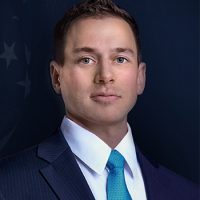
My name is Brad Simon, and I am a proud member of the Capovilla & Williams team. We are a law firm dedicated to serving veterans, service members, college students, and federal employees across the country. As a former Air Force JAG and Area Defense Counsel, I focus my work on helping our servicemembers combat allegations in Texas and around the world. I have the great honor of overseeing Texas Operations at Capovilla & Williams. I consider installations such as Fort Hood, Fort Bliss, Joint Base San Antonio, Lackland AFB, Randolph AFB, Sheppard AFB, Dyess AFB, Laughlin AFB, and Goodfellow AFB my home bases.
Last week, I was proud to defend an E-7 at Fort Hood, Texas, who was wrongly accused of knowingly using CBD. Despite my efforts to convince the command that this decorated soldier did not intentionally break the law, they did not listen. The command’s legal advisor recommended that the E-7 be sent to an Other Than Honorable Separation Board, where he was forced to fight for his career, future, retirement, and livelihood.
UNDERSTANDING ARTICLE 112a ALLEGATIONS
Article 112a outlines three key requirements that the Government must prove against you: (1) that the substance in question is prohibited; (2) that your choice to use this substance was wrongful; and (3) that you were aware of both the substance and its illegal nature.
Article 112a criminalizes seven primary actions:
- Wrongful Use: Ingesting, injecting, or inhaling a controlled substance.
- Wrongful Possession: Having physical control or custody of a substance.
- Wrongful Distribution: Selling, giving away, or sharing drugs.
- Wrongful Introduction: Bringing substances onto a military installation, vessel, or vehicle.
- Wrongful Manufacture: Producing controlled substances.
- Possession/Distribution with Intent: A more serious offense that involves larger quantities.
- Importation/Exportation: Moving substances into or out of the U.S.
Wrongful use and possession are the most common allegations under Article 112a, and these charges often lead to administrative separation boards. If you fail a urinalysis, it is crucial to remain silent, hire an attorney, and prepare to defend your career.
THE WINNING STRATEGIES TO BEAT ARTICLE 12a ALLEGATIONS
At Capovilla & Williams, we have handled thousands of drug-related allegations at military installations nationwide. Personally, I have represented hundreds of service members who tested positive on a urinalysis. Through this experience, I have identified two primary strategies for successfully challenging false drug use allegations: contesting the accuracy of the test itself or establishing an innocent ingestion defense—ideally, both approaches can be utilized.
Drug Testing Errors: The Department of Defense (DoD) conducts drug tests on nearly 60,000 service members each month, with samples sent to various federal laboratories for analysis. The process should be straightforward: the Unit Prevention Leader (UPL) collects the sample, seals and labels it, and then transfers it to your installation’s Army Substance Abuse Program (ASAP) director or office. From there, the sample is sent to a DoD laboratory for testing. It’s important to note that these samples are physically packed in a box, mailed, and delivered to a lab. Any deviation from these procedures can lead to serious errors that may jeopardize your military career.
A lot can go wrong during this process. Many UPLs recognize that the entire system relies on humans not making mistakes. Our attorneys, paralegals, and investigators are trained to identify even the smallest errors in the testing process. We have successfully won cases by arguing that samples leaked, were tampered with, were improperly stored, had incorrect DoD ID numbers recorded, or that there were issues with the documentation itself. All of these factors must be examined when defending against a false allegation of drug use or possession.
Innocent Ingestion: It’s important to understand that it is not illegal to have a controlled substance in your body; it is only illegal to knowingly and wrongfully ingest that controlled substance. The government must do more than just present your positive urinalysis in court or at a separation board—they must prove that you knowingly and intentionally ingested the illegal substance. At Capovilla & Williams, we have successfully defended service members who innocently ingested a controlled substance. We’ve encountered cases where a service member was illegally drugged against their will, tricked into consuming marijuana-infused brownies, accidentally took a spouse’s medication, or came into contact with cocaine through interaction with a known user. We have also represented clients who were prescribed the wrong medication.
We have successfully won innocent ingestion cases at nearly every major military installation across all branches of the Armed Forces, including Soldiers, Airmen, Marines, and Sailors. Each of our clients facing allegations under Article 112a is assigned a lead attorney, a paralegal, and a dedicated investigator. Our investigators are all former federal agents from Army CID, Air Force OSI, or Navy NCIS. These trained professionals are committed to working on your behalf, utilizing their expertise to build the strongest possible defense for your innocent ingestion case.
THE WINNING STRATEGY AT FORT HOOD
In this case, I quickly discovered that my client did not knowingly take CBD. His nanogram levels were low which allowed us to credibly argue that he did not knowingly use the substance. My investigator, Justin Powers, who you can learn about here worked very closely with our client. We were able to pinpoint when and how this innocent ingestion occurred. Justin then went out to interview witnesses to build upon our client’s story. This was very helpful as we were able to use eye-witness testimony to build the credibility of our client.
From there, I contacted a forensic toxicologist that we like to work with. I asked this expert to examine the lab results and all the affiliated data. After a thorough review of the file, our expert was able to provide an affidavit to the board members that this was very likely an innocent ingestion. This carried a significant amount of weight with the members and the Government could not provide any evidence to rebut those findings.
In closing argument, I was able to put all of these facts together and effectively argue that our client innocently took CBD and that he successfully passed dozens of drug hots in his career. Despite my argument, the recorder still asked for an Other Than Honorable Discharge, which would have caused my client substantial harm in his civilian life.
THE VERDICT IS IN AND OUR CLIENT IS RETAINED!
You never know how long board members will take to deliberate. I’ve had cases where they concluded in less than an hour, while others have taken several days. In this instance, they deliberated for approximately 30 minutes before deciding to retain my client.
This moment was magical for both my client and me. We had worked together for months, building his defense, uncovering the truth, and fighting with everything we had. When his career was saved, it made all our efforts worthwhile.
At Capovilla & Williams, defending servicemembers is our mission, and I truly believe there is no law firm in America that does it better than we do. Our team comprises nearly 40 members, all working towards a common goal: protecting and defending our Soldiers, Sailors, Airmen, and Marines around the world.
To learn more about how we fight against Article 112a allegations, check out this episode of Military Justice Today: Defending Against Drug-Related Charges in the U.S. Military.
Brad Simon
Military Defense Attorney
Capovilla & Williams


