

How to Fight Back Against BAH Fraud Cases in the Military
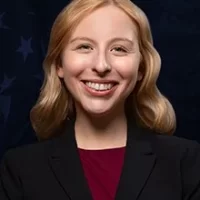
I spent several years serving as both a prosecutor and a defense attorney in the United States Air Force as a JAG Officer. During that time, I handled multiple cases involving allegations of Basic Allowance for Housing (BAH) fraud. I gained valuable insights into how law enforcement investigates these cases, how prosecutors analyze them, and the most effective defense strategies for combating false, weak, or unproven BAH fraud claims. In this article, I will share the lessons I’ve learned through hard work, dedication, and my experiences working on these cases at the highest levels.
WHAT IS BAH FRAUD AND WHAT DOES IT MEAN FOR YOUR CAREER
BAH serves as vital financial support for service members who opt not to live in government housing or who lack access to it. The allowance is meticulously calculated based on factors such as rank, location, the local housing market, dependency status, and marital status.
BAH fraud occurs when a service member submits inaccurate or misleading information and/or fails to provide essential updates to secure a higher allowance than deserved. The government is unwavering in its commitment to combat this type of fraud, given the substantial funds earmarked for BAH in the federal military budget. Having participated in numerous meetings with OSI agents and military prosecutors, I’ve witnessed firsthand the thorough investigations and prosecutions of these cases. All branches of the Armed Forces are determined to vigorously pursue BAH fraud cases. If you find yourself accused of BAH fraud, it’s imperative that you approach the situation with seriousness and urgency.
TYPICAL EXAMPLES OF BAH FRAUD IN THE MILITARY
BAH fraud cases come in various forms, but at Capovilla and Williams, we consistently recognize certain patterns. Typically, we’re dealing with situations where a Service Member is accused of:
- Claiming a higher BAH rate through false marital or dependency status.
- Failing to update the Military Housing Authority regarding changes to marital status after a divorce or separation.
- Providing incorrect or outdated addresses to secure a higher BAH based on a pricier location.
- Colluding with another party, such as a landlord or spouse, to forge documents for BAH gains.
- Engaging in sham marriages.
Recently, we successfully defended a client accused of falsifying a lease, claiming that his wife was living in New York City while he was stationed in Korea. We effectively dismantled the baseless allegations put forth by Army CID, leading to the dismissal of the charges.
Last year, we took on a case where our client was accused of marrying his girlfriend solely for the purpose of receiving BAH. The Army contended that love was not a factor, only financial gain. Our team hit the ground running, interviewing family members from both sides, gathering the marriage certificate, and demonstrating their shared finances as a married couple. We also compiled numerous photographs of them together, both before and after their wedding. Through diligent effort, we once again thwarted criminal charges by outworking CID and the military prosecutors.
ARTICLE 121, UNIFORM CODE OF MILITARY JUSTICE, FOR LARCENY OF GOVERNMENT FUNDS
When the government suspects you of BAH fraud, it may charge you under Article 121 of the Uniform Code of Military Justice (UCMJ) for larceny. To establish that you committed larceny by improperly obtaining government funds through a fraudulent BAH claim, military prosecutors must demonstrate several key elements:
- You wrongfully took BAH money.
- The funds in question belonged to the United States government.
- You took a specified amount of money.
- You had the intent to defraud or permanently deprive the government of those funds.
If the alleged amount taken exceeds $1,000, the offense is considered a felony. In such cases, the likelihood of the government pursuing a court-martial or formal charges increases significantly. The potential consequences for taking more than $1,000 in funds can include a dishonorable discharge, confinement for up to 10 years, and a reduction in rank to E-1.
Given the seriousness of these allegations, it is crucial to seek immediate legal assistance. However, it’s important to remain optimistic; many individuals have successfully navigated similar situations. In the following sections, I will share how we have effectively managed numerous BAH fraud allegations for our clients, showcasing that there is always hope for a favorable outcome.
ARTICLE 107, UNIFORM CODE OF MILITARY JUSTICE, FOR FALSE OFFICIAL STATEMENT
When dealing with allegations of Larceny, many clients also face charges of making a False Official Statement, particularly in cases involving improper claims for BAH. In these situations, the government may assert that the lease or marriage documents submitted were fraudulent, using this claim as the foundation for accusations of deceit against the government.
False Official Statement accusations are serious and classified as felony-level offenses. The potential consequences include a Dishonorable Discharge, up to five years in prison, and a reduction in rank to E-1.
To successfully establish this charge, prosecutors must demonstrate four key elements: that you made a specific statement or signed an official document, that this statement or document was entirely false, that you were aware of its falsehood, and that you made the statement with the intent to deceive.
These allegations can have severe repercussions, affecting your career, freedom, and all that you have worked to achieve. However, there are strategies to contest and potentially win against these charges. It’s important to note that proving intent to deceive is a challenging task for military prosecutors; they must establish, beyond a reasonable doubt, that you acted with a guilty mind. If the situation arose from an honest mistake, confusion, or reliance on misleading information, you may have a viable defense against these allegations.
HOW TO BEAT A WEAK OR FALSE BAH FRAUD ALLEGATION
First and foremost, don’t simply accept the word of law enforcement or military prosecutors without question. Over the years, we’ve witnessed countless cases where law enforcement has made significant errors in investigating BAH Fraud cases. They often rely on outdated leases, miscalculate financial figures, or exaggerate the alleged criminality involved. If you’re truly committed to fighting back, it’s essential to assemble the right team equipped with the necessary resources. At Capovilla and Williams, we have six former federal agents in our office. Many of these investigators have been trained by CID, NCIS, or OSI on how to thoroughly and accurately investigate BAH Fraud cases. Together with our attorneys, these experts can dissect allegations, dismantle unfounded claims, and effectively highlight inaccuracies in the investigations. Trust in a team that knows how to safeguard your interests.
Second, it’s important to understand that proving fraudulent intent in military cases is a significant challenge. Prosecutors must establish that there was a specific intention to defraud or deceive the government to unlawfully obtain more BAH money. Those of us with military experience know that the financial regulations can be poorly written, confusing, and difficult to navigate. Additionally, individuals working in military finance offices often lack comprehensive knowledge of their own policies, leading to the provision of inaccurate advice to Service Members. If you made an honest mistake or acted on misleading information, it’s clear you do not possess the criminal intent necessary for charges of Larceny or BAH Fraud. This understanding is a critical component of any effective BAH Fraud defense.
Finally, we’ve encountered instances where the Defense Accounting Service (DFAS) overpays Service Members due to systemic failures or administrative errors. A recent case highlighted this issue when a client received more bonus compensation than entitled. The Soldier, trusting that DFAS was accurate, was caught off guard when thousands of dollars were removed from his account, leading to a CID interview. It’s important to know that you are not responsible for DFAS’s mistakes. If you find yourself in a similar situation, we are here to assist you effectively.
WE CAN HELP YOU FIGHT BACK AGAINST BAH FRAUD ALLEGATIONS
Capovilla & Williams is recognized as one of the nation’s leading military defense law firms. Our unmatched experience, resources, and expertise in defending Service Members against BAH Fraud cases distinctly set us apart from all military public defender offices and civilian military law firms. When it comes to safeguarding your rights, we are unequivocally the top choice you can trust.
With over 300 years of combined military law experience among our attorneys, paralegals, and investigators, we are arguably the only military firm in the nation that provides each client with a dedicated team committed to fighting fiercely on your behalf. Each individual accused of BAH Fraud is assigned a seasoned attorney with extensive military law experience, an outstanding paralegal, and a dedicated investigator. We don’t rely on CID, OSI, CGIS, or NCIS to determine the facts of your case; we conduct thorough reviews of your LES, interview witnesses, gather vital documents, and investigate diligently on your behalf to achieve your goals.
Our mission is to amplify your voice, protect your rights with unwavering vigor, and advocate relentlessly on your behalf. We do not answer to your command, law enforcement, or military prosecutors. Our sole objective is to help you triumph.
Contact us today for a complimentary consultation. Call us at 855-442-6271.
Lacey Parham
Military Attorney
Capovilla & Williams


