

VALUABLE LESSONS FROM MY JOURNEY: TRANSITIONING FROM ACTIVE DUTY TO PRIVATE PRACTICE
Making the leap from military service to the world of private practice has been an eye-opening experience filled with challenges and growth. In retrospect, I’ve gathered some hard-earned insights that I believe can resonate with others facing a similar transition.
In this article, I share my journey from being a fit and lean Army officer to becoming an obese civilian attorney, and then back to a healthier lifestyle. My hope in telling this story is to positively impact veterans who read it, helping them avoid some of the missteps I made after leaving the Army. I also aim to inspire others like me who fell significantly out of shape after military service and are looking to make positive changes in their health journey.
THE INSTANT I REALIZED EVERYTHING HAD TO CHANGE—AND QUICKLY!
I remember that day very well. My wife was eight months pregnant with our twin boys, I had just celebrated a court-martial victory the week before, and it was time for my annual physical. I knew I had gained some weight since leaving the U.S. Army, and my body didn’t feel great. However, in my mind, I was pretty much still the same lean, fit 175-pound Army officer I had been the day I left. Admittedly, I no longer lifted heavy weights, ran 20-30 miles a week, or tracked my calories, but I still thought I fit the profile of a healthy soon-to-be 40-year-old man—or at least I believed I did.
I stepped on the scale and was shocked to see an incredible number: 240 pounds! A sinking feeling took over my gut, and honestly, I was so embarrassed that I seriously considered canceling the visit altogether. My mind simply could not comprehend that I had gained 65 pounds since leaving the U.S. Army.
To make matters worse, after my doctor evaluated me, he handed me a few sheets of paper. The top of the paper read “Diagnosis,” and my heart literally broke when I saw a check mark next to the “Obesity” box. Amidst building our business, getting married, trying cases, and dedicating myself to my mission—impacting the lives of millions of Service Members, Veterans, College Students, and Federal Employees all over the world—I had become obese.
EMBRACING REALITY AND FINDING PEACE STARTING MY HEALTH JOURNEY
My initial reaction to realizing that I had become obese, out of shape, and dangerously unhealthy was one of despair. As I left the doctor’s office, I ran through all the excuses I could muster in my head. I remember thinking things like, “That doctor is an idiot who doesn’t know what he’s talking about,” and “Running a growing business is so stressful that no one truly understands.” In short, I was acting like a lost boy who just wanted to run and hide from reality.
What did I do? I went home and ate ice cream. I thought I deserved it after a tough day, but I’m not exactly sure what I was rewarding myself for. Instead of making me feel better, it only made me feel worse. That night, I didn’t get much sleep, and I remember my wife trying to cheer me up by telling me how handsome she still thinks I am.
I woke up the next morning, took a photo of my current physique, and almost felt sick at what I saw. There was no muscle definition, love handles and rolls of fat large enough to make me uncomfortable. I looked disgusting. More importantly, I realized I was living below my own standards, and that was unacceptable to me.
For as long as I could remember, I had been an overachiever. My friends and family praised my willpower, discipline, and commitment. As I prayed and meditated over my current predicament, I started to understand that my weight gain was not due to laziness — I was anything but lazy. It stemmed from my inability to take proper care of myself and manage the anxiety that comes with taking significant risks in the business world.
The week ended on a very low note. My doctor called to discuss my blood results. I had elevated levels of bad cholesterol, elevated triglycerides, and decreased HDL levels. My Vitamin D levels were shockingly low, and then the doctor told me something I will never forget: “You have markers consistent with being pre-diabetic, Rob.” Here I was, not 40 years old, the CEO of a growing law firm with nearly 40 employees, and my wife about to give birth to twin boys. I no longer felt vibrant, strong, or, in my view, even healthy.
UNLOCK THE POWER OF YOUR MIND, AND WATCH HOW YOUR BODY FOILLOWS SUIT!
After a week or so of acting like a baby, and a victim, I decided to pull myself out of it. I realized that the issue was not really about my body, it was about my mind. Somewhere along the line, I convinced myself that I needed food to help ease some of the stress and strain I was under. Food had become an unhealthy outlet to help ease the pressure I felt each day to perform.
I made a decision to change my lifestyle. First, I cleared out all the junk food and unhealthy snacks from my house. Next, I hired a trainer and a nutritionist. Together, we created a step-by-step plan to help me live a healthy and active life. I set three specific goals: (1) reduce my body fat to 18 percent by the time I turned 40 years old; (2) join the 1,000-pound club again; and (3) complete a half marathon while ruck marching.
As part of my health journey, I read the book “Outlive” by Peter Attia. He includes an entire section on the health benefits of ruck marching, which piqued my interest. I remembered how much I enjoyed ruck marching during my time in the Army. I successfully completed the Manchu Mile, a challenging 25-mile combat-equipped ruck march in South Korea, and I had no trouble finishing the 12-mile ruck march required to graduate from Air Assault School.
THE JOURNEY TO THE ALL-AMERICAN HALF MARATHON AT FORT BRAGG, NORTH CAROLINA
I committed myself to a consistent health routine. Every morning, I woke up at 4:30 AM, meal prepped, packed my food and vitamins, and by 5:30 AM, I headed to the gym. My trainer focused my workouts on a combination of traditional muscle-building exercises, such as squats, deadlifts, and bench presses. We also included a lot of push-ups, pull-ups, and high-intensity interval training routines. Additionally, we developed a ruck marching program aimed at increasing my endurance and lung capacity.
The greatest challenge I faced was balancing my goal of joining the 1,000-pound club with ruck marching a half marathon. I remember watching many YouTube videos by Nick Bare, the CEO of Bare Performance Nutrition. Like me, he is an Army veteran, entrepreneur, and CEO. He is also a renowned hybrid athlete who combines strength training with a significant amount of running. I studied his routines, eating habits, and disciplines closely.
In December 2025, my trainer and I set an ambitious goal to ruck march the All-American Half Marathon at Fort Bragg, North Carolina. With Capovilla & Williams proudly sponsoring Fort Bragg’s MWR Program, we felt a deep honor in co-sponsoring the event. I was filled with excitement to achieve this goal.
Over the next five months, I committed to my training regimen. Gradually, I began to see my muscles reemerge, and my endurance increased significantly. I was completing 8 to 10-mile ruck marches on a weekly basis. I complemented this training with a solid core strengthening routine and regular stretching. My wife and I also joined a local spa where I could take advantage of their saunas and cold plunge. I focused on intense work combined with adequate rest and recovery.
THE DAY OF THE RACE HAS FINALLY COME—TIME TO SHOW WHAT YOU’RE MADE OF OR STEP ASIDE!
I understand that many of the readers of this post are veterans. Most of you have faced challenges in the Army that are far greater than what I have experienced. Many of our subscribers are former Rangers, Infantrymen, and combat veterans, so this may seem somewhat trivial to you. However, for me, considering the effort I put into returning to a respectable level of physical fitness, this was a significant day.
My team and I arrived at Fort Bragg the night before the race, and my wife and I checked into our hotel. We packed everything I needed to stick to my normal routine as much as possible. This included food for my usual breakfast, my favorite pre-workout supplements, my water bottle, rucksack, and all of my gear. I did my best to go to bed at my regular time and focused on following the routine that had brought me this far.
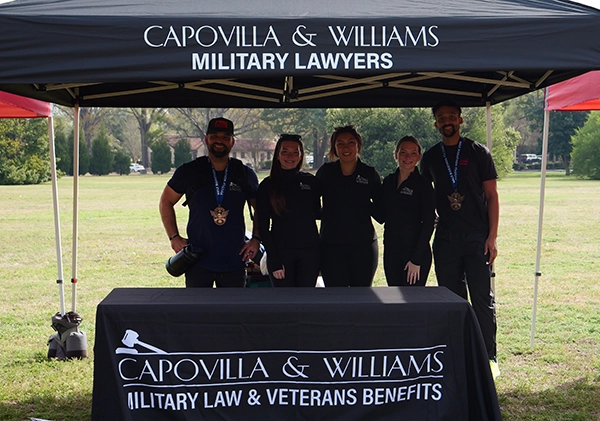
The next morning, we woke up around 4:30 AM and drove to the main gate. Members of my work family were already there, setting up our table, organizing the swag, and preparing to represent our firm as George Yates and I got ready for the half-marathon ahead. George, a member of my team and a former Army JAG Officer, traveled from D.C. to run in the half-marathon.
My goal was to finish the race with an average pace of under 18 minutes per mile, and I started off really fast. For the first 2-3 miles, I maintained a pace of 13:30 and felt great. However, after the third mile, I decided to pull back a bit and settled into a 15:30 pace.
On one hand, it was a humbling experience because nearly every other participant was there to run the race, while I was rucking. Consequently, I found myself near the back of the pack. On the other hand, I was really proud of myself for keeping this pace, and I felt fantastic.
By mile ten, I started to feel some mild cramping in my glutes. However, the discomfort never escalated beyond a mild concern, and I stayed focused on the task at hand. In fact, I completed the last three miles faster than the previous three miles. As I approached the finish line, I checked my watch and felt a jolt of excitement, realizing that I was on track to finish the race at a sub-15:30 pace, which was much faster than I had anticipated.
As I crossed the finish line, I was surprised at how light my body felt, and I experienced a profound sense of accomplishment. I had set this goal six months earlier, and I had achieved it. While it may not have been a monumental achievement, it was significant to me, especially considering that I was obese when I started training. This marked a wonderful steppingstone toward the next phase of my fitness journey, and it was the first time in a long while that I felt strong again.
REFLECTING ON MY JOURNEY: INSIGHTS GAINED AND WHAT LIES AHEAD
I do not recommend that anyone gets as out of shape as I was. I know that in today’s overtly sensitive world, folks get upset about calling someone obese or fat. Those words do not offend me and, truth be told, I had gotten very fat, which had real negative consequences for my health. To be 39 years old, an expecting father, and a business owner requires the very best I can offer the world. I was not able to give that when I ballooned up to 240 pounds. I felt sick often, tired every day, and I felt out of breath walking up and down steps.
I’m currently 200 pounds with about 17.5% body fat, and I stay active all the time. I lift weights four days a week, ruck march an average of 20 to 30 miles weekly, and track all my macros. I feel absolutely great and am very close to joining the 1,000-pound club. I’ve set a goal to achieve 15% body fat by the day I turn 42 years old, and I plan to ruck a full marathon by September 2026. Additionally, I aim to participate in more events with the guys from GoRuck. I’m hardly ever sick, and I’m a more active and engaged father. Overall, my life is simply better—much better.
Here’s the big idea: do not settle for less than your best. I don’t care what other people say or the standards they live by. At 240 pounds, I was living below my own standards and felt miserable. Now, I enjoy spending time with my family, appreciate nature more, and I’m infinitely more comfortable in my own skin. I’m driven as much by the desire to live a long, healthy life for my sons as I am by the goal of performing at my very best. Do I miss cheat meals and Friday night ice cream excursions? Yes, of course! I love food, but I love living actively and vibrantly even more.
Stay committed, set big goals, and get specific about how you’re going to achieve them. Focus on your mission and your “why,” and never settle for anything less than your own standards. God bless!


